

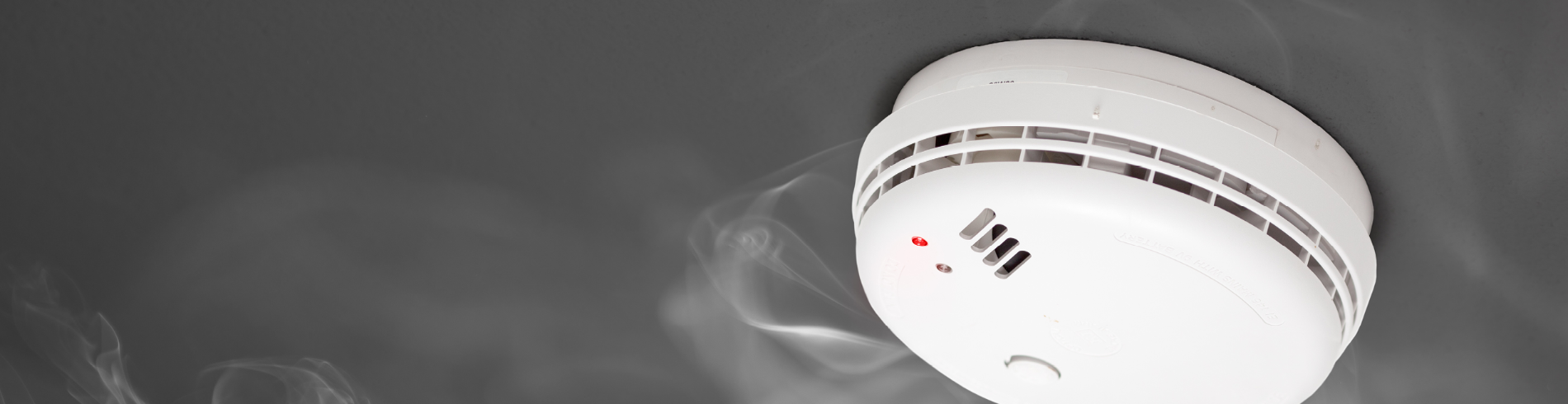
Smoke Alarms


Smoke alarms help save lives in an emergency. It is the law to have working smoke alarms:
- Outside all sleeping areas
- On every storey of your home
- Consider one for every bedroom
Failure to comply could result in a fine under the Ontario Fire Code.
Smoke alarms expire every 10 years. Be sure to change the unit out when expired and change/test batteries at least twice a year.
If you have hard-wired alarms in your home, the units must be installed and/or serviced by a licensed technician/electrician. If you are a tenant, your landlord or property manager is responsible for maintaining your alarms including supplying batteries and replacing alarms.
If the Alarm Sounds
If your smoke alarm is in full alarm mode, alert others and evacuate to the meeting place outside of your home. Do not re-enter your home and call 911 from a safe location.
If the alarm is chirping, first check the area to try to detect the smell of smoke. If you are certain that no emergency exists, assess the number of chirps and the interval between chirps. Check the manual to determine the cause of the beeps. For example, an alarm may chirp once every minute to indicate the battery is in need of replacement, or once every 30 seconds for end of life notification. If you need assistance, call EGFES at 905-853-8842 and ask to speak with a Fire Prevention Officer.
Smoke Alarm Maintenance
- Test your smoke alarms every month using the test button
- Replace smoke alarm batteries twice a year and whenever the low battery warning sounds
- Replace smoke alarms every ten years
After 10 years, the smoke alarm has tested the air in your home 3.5 million times. The components inside the alarm can wear out and may not detect a fire as quickly. Most manufacturers require replacement, including hard wired (electrical) alarms, after ten years to ensure the best level of protection in your home.
Nuisance Alarms
Sometimes smoke alarms are accidentally set off, generally because of cooking activities or steam from the shower. To help this problem so smoke alarms only go off when there is a real emergency:
- Install smoke alarms with a "pause" or "hush" feature
- Move the alarm elsewhere on the ceiling
- Use the fan on the range hood when cooking
- Avoid having a smoke alarm too close to the cooking area
- Keep ovens and burners clean and turn down the setting on the toaster
Types of Alarms
Battery-operated alarm
A battery-operated alarm is a single unit that is placed onto the ceiling of your home, on every floor and outside of sleeping areas that runs off of batteries. This alarm is only capable of detecting smoke. It is important to test and change the batteries at least twice a year.
Hardwired alarm
Hardwired alarms are wired directly into your home’s electrical system. In this setup, the cables run from one sensor to the next. This means your alarms will have a continuous power supply. Interconnected hardwired smoke alarms allow all alarms connected on the same wire to sound at the time, meaning when one alarm sounds they all will sound. It is still important to test these alarms regularly, even though they don't have batteries.
Combination alarm
Combination alarms are a single unit that is placed on the ceiling of your home, on every floor and outside of sleeping areas. This alarm is capable of detecting both smoke and carbon monoxide (CO). Learn more about CO alarms.
Contact Us
Our Customer Service Team is here to help!


